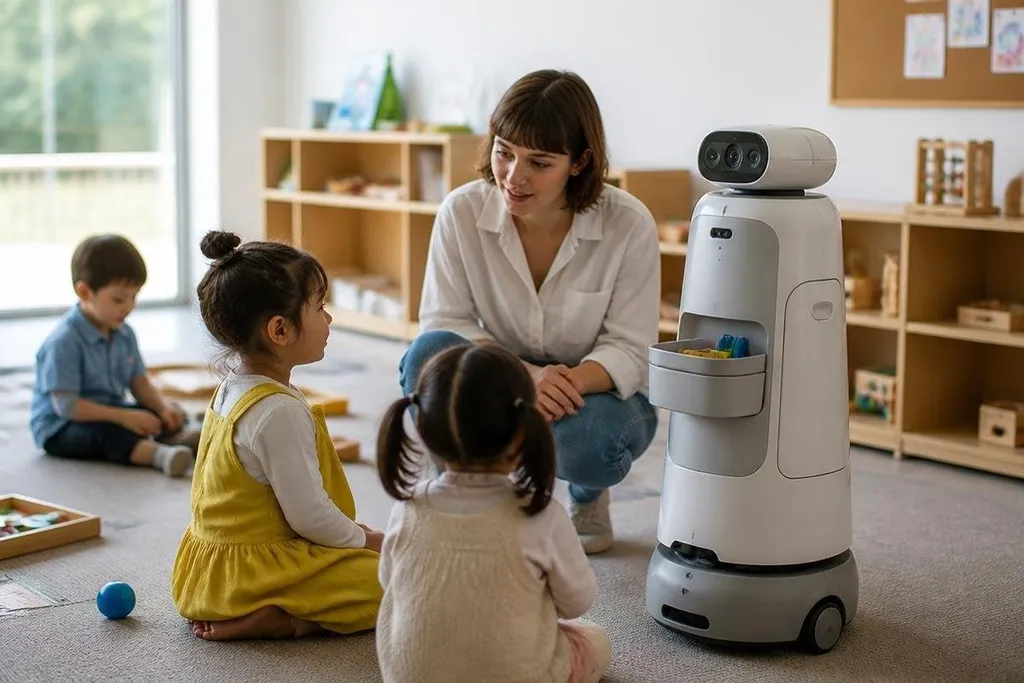
A childcare robot may hear a child through a microphone, see a room through cameras, and respond through software. Those parts create separate questions about safety, privacy, supervision, and the kind of care a machine can reasonably give.
- Cameras can record more than the task requires.
- Remote control changes who is responsible for an action.
- A child’s comfort matters as much as a robot’s task result.
What the robot is allowed to do
The first question is not how human the robot looks. It is what the robot can do without an adult taking over.
A system that reads stories from a fixed script raises a different concern from one that moves around children, carries objects, or responds to distress.
That difference needs to appear in the rules. A robot that stays on a table may need limits on sound, images, and data storage. A mobile robot needs added rules for speed, collision detection, safe stopping, and access to rooms.
The task should be narrow enough for an adult to check. “Keep children entertained” is too broad to test. “Play a pre-approved story for ten minutes while a staff member remains in the room” gives the operator something they can inspect.
The adult cannot disappear from the loop
Childcare robots may sort toys, play audio, guide movement games, or answer set questions. None of those tasks removes the need for a person who can read a child’s mood, spot a health problem, or stop the system when the room changes.
Remote teleoperation adds another layer. A person outside the room may be able to send commands, view camera feeds, or speak through the robot. Families and staff need to know when that link is active, who can access it, and what happens if the network drops.
The handoff also needs a visible signal. A child should not have to guess whether a nearby machine is acting on its own, following a script, or being controlled by someone elsewhere.
Privacy starts with the sensors
Microphones and cameras collect information about children who may not understand what recording means. The system may also process voices, faces, movement, and speech patterns to decide how to respond.
A childcare provider should ask for the smallest data set that can support the task. If a robot can play a story without saving video, recorded video needs a clear reason. The same test applies to audio, location data, and logs of a child’s interaction.
Retention rules need plain answers. Who stores the data? How long does it remain available? Can a parent ask for deletion? Can the maker use the material to train another system? A contract that leaves these points vague puts staff in a difficult position.
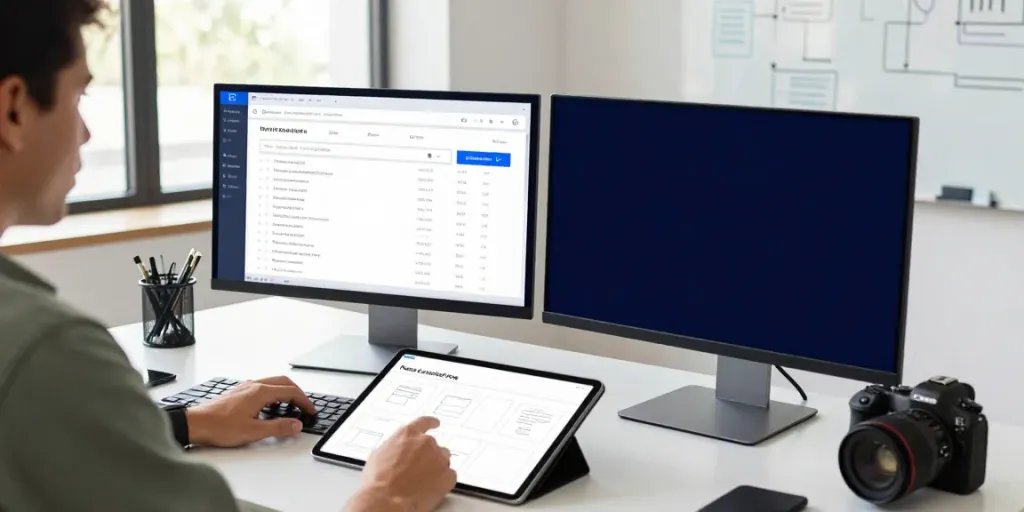
A childcare operator can use a dated report from Robot 24 to compare a robot’s data rules with its storage setting, deletion process, and staff controls. That keeps the privacy question tied to the machine’s real job before the next section looks at limits a task list cannot show.
Care has limits a task list cannot show
A robot can repeat the same words without getting tired. That may help with a story or a routine instruction, but repetition is not the same as care. A child may need comfort, a change of activity, or help from a person who understands the wider situation.
Voice recognition can also fail when several children speak at once, when a child uses an accent the system handles poorly, or when the room is loud. A wrong answer may be harmless during a game. It may matter more when a child reports pain, asks to leave, or describes a safety problem.
I would not place a childcare robot in charge of decisions about a child’s health, safety, movement, or contact with an adult. Those decisions need a named human owner, a clear stop control, and a record of what happened.
A practical check before use
A provider considering a trial can use this short check before bringing a machine into a room:
- Set the task: Write down the exact activity, start condition, end condition, and adult supervisor.
- Map the sensors: List every camera, microphone, speaker, distance sensor, and network connection.
- Test the stop: Confirm that staff can stop movement, sound, and remote access without waiting for the robot to respond.
- Check the data: Record what the system saves, where it goes, who can see it, and when it is deleted.
- Plan failure: Decide what staff do after a wrong answer, lost connection, blocked sensor, or unexpected movement.
- Ask the children: Use age-appropriate language to explain the robot and watch for fear, confusion, or avoidance.
These checks turn a broad promise into a task that adults can supervise. They also give parents a direct way to ask what the machine does inside the room and what remains under human control.
The open question is not whether a robot can take part in childcare. It is whether providers can define its limits clearly enough that a person stays responsible when the system behaves differently from the plan.